
- Individueller Seidenschal
- Individuelle Krawatte
- Individuelle Fliege
- Custom Print Fabrics
- Printed Satin Silk Fabric
- Printed Twill Silk Fabric
- Printed Silk Crepe De Chine Fabric
- Printed Silk Georgette Fabric
- Printed Silk Habotai Fabric
- Printed Silk Jacquard Fabric
- Printed Silk Cotton Fabric
- Printed Silk Viscose Fabric
- Printed Silk Linen Fabric
- Printed Silk Tencel Fabric
- Printed Silk Modal Fabric
- Printed Silk Wool Fabric


“100% silk” tells a buyer the fibre, but not how a scarf will look, feel or move. Two scarves can use the same fibre and still communicate very different brand identities. Silk habotai and silk crepe de Chine are a useful comparison: both can make lightweight printed accessories, yet their surfaces and handling are not interchangeable.
This guide is for brands developing a Seidenschal nach Maß, not for choosing a fabric by name alone. The best decision comes from comparing the proposed weights, finishes and printed samples in the same size and design. A supplier should confirm the current base cloth and production route for your project rather than treating the descriptions below as a fixed specification.
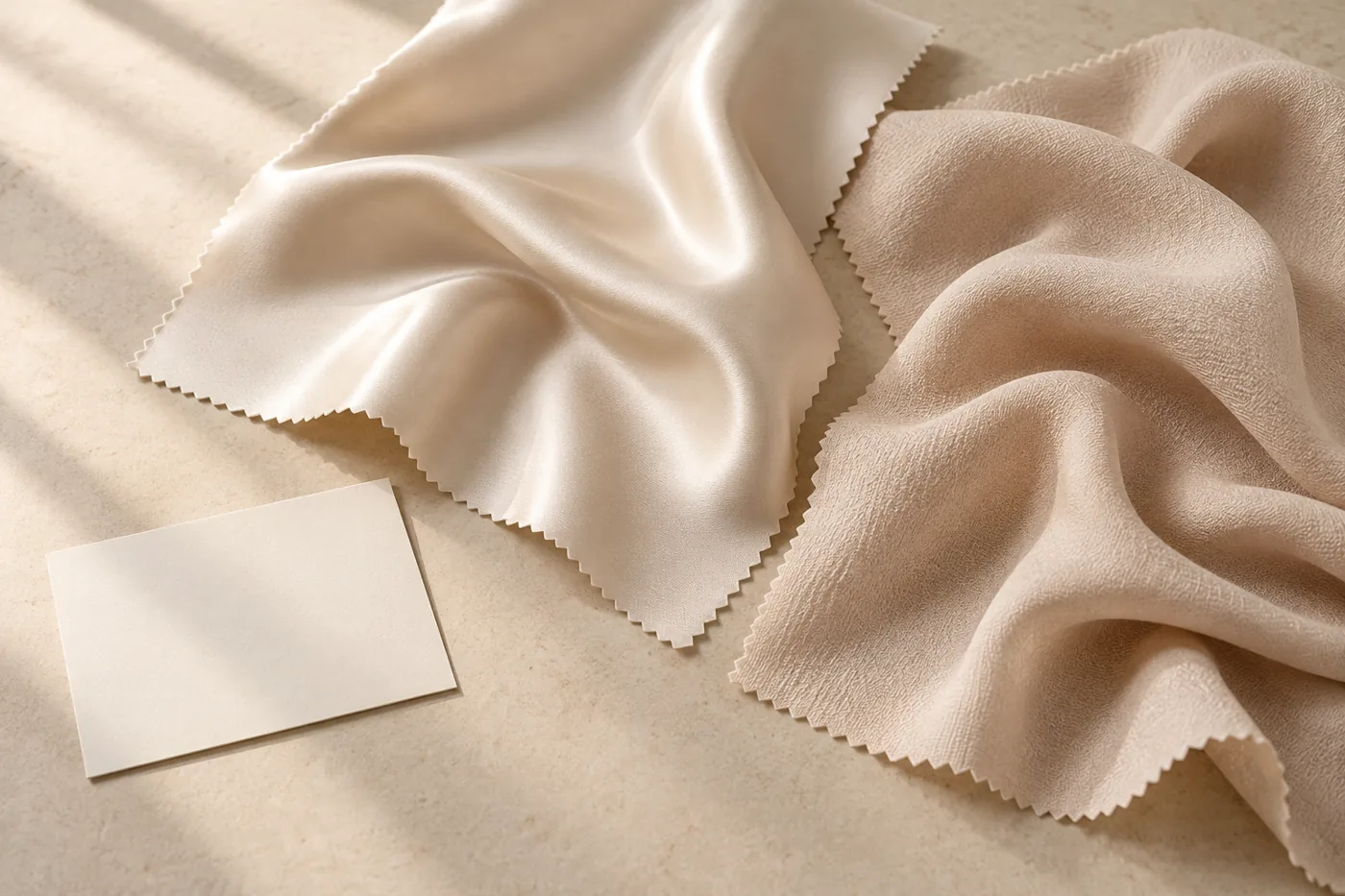
What is the difference between habotai and crepe de Chine?
Habotai is generally a smooth, light plain-weave silk. It is familiar in linings, light scarves and other applications where a soft, simple surface is useful. Crepe de Chine has a finer, slightly pebbled character associated with twisted yarns; its surface tends to reflect light more quietly. These are starting descriptions, not guarantees about every available cloth. Weight, finishing and printing can change the result substantially.
For context, CottonWorks explains how high-twist yarns and finishing create a crepe surface. A Dharma Trading silk-scarf catalogue offers examples of habotai and crepe de Chine scarves at different weights and sizes. Those examples describe that supplier’s products; they are not CarinaSilk stock specifications or universal price rules.
Habotai: a clean, lightweight impression
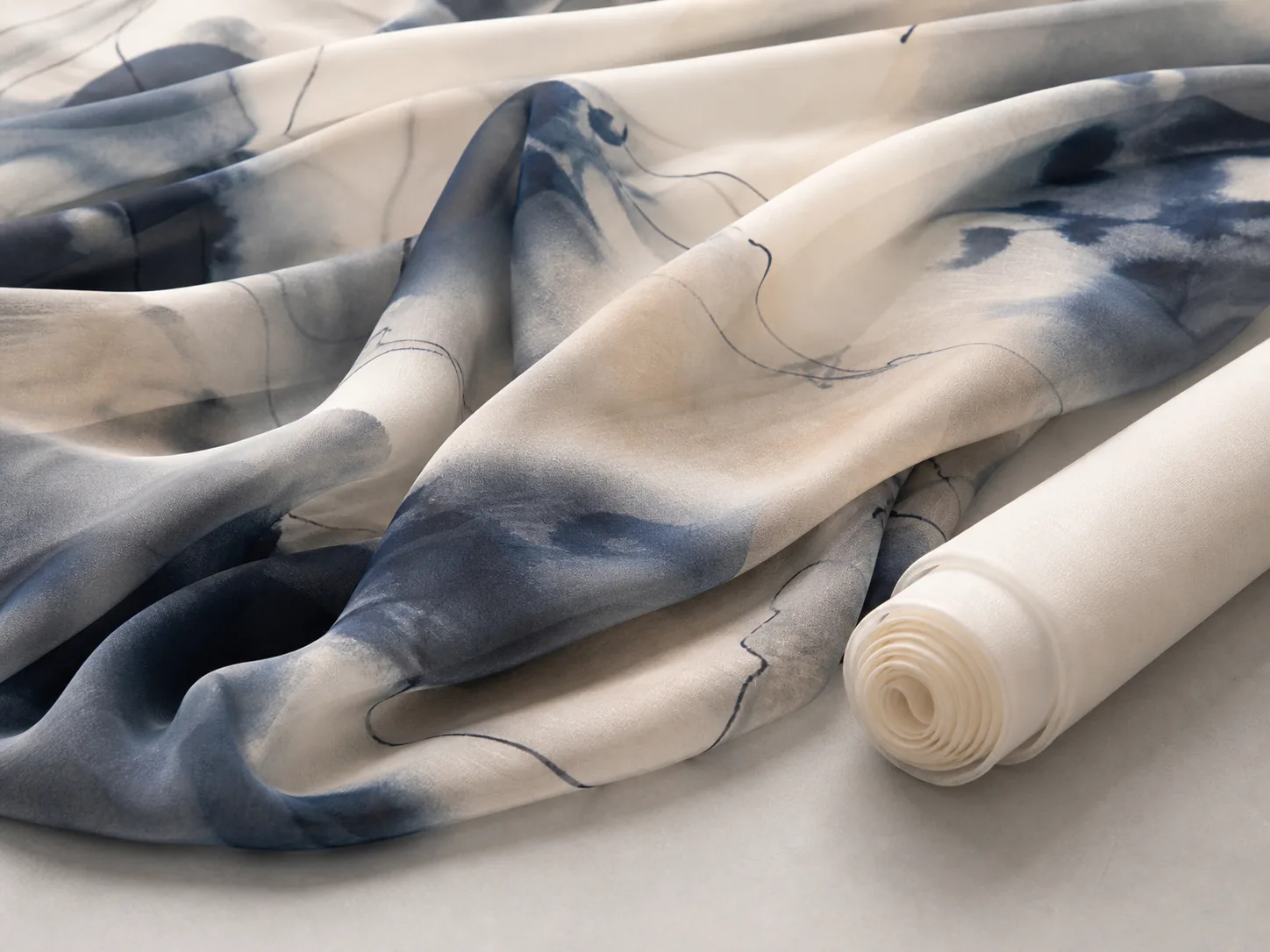
The relatively smooth surface of CarinaSilk’s printed silk habotai can suit a design that calls for an airy hand and a straightforward visual base. It may be worth sampling for small scarves, light accessories or projects in which the cloth should move easily without a prominent woven texture. A very light option may show the garment beneath it or allow more of the print to be seen from the reverse, so opacity and back-side appearance should be checked on the actual sample.
Crepe de Chine: subtle texture and a softer reflection
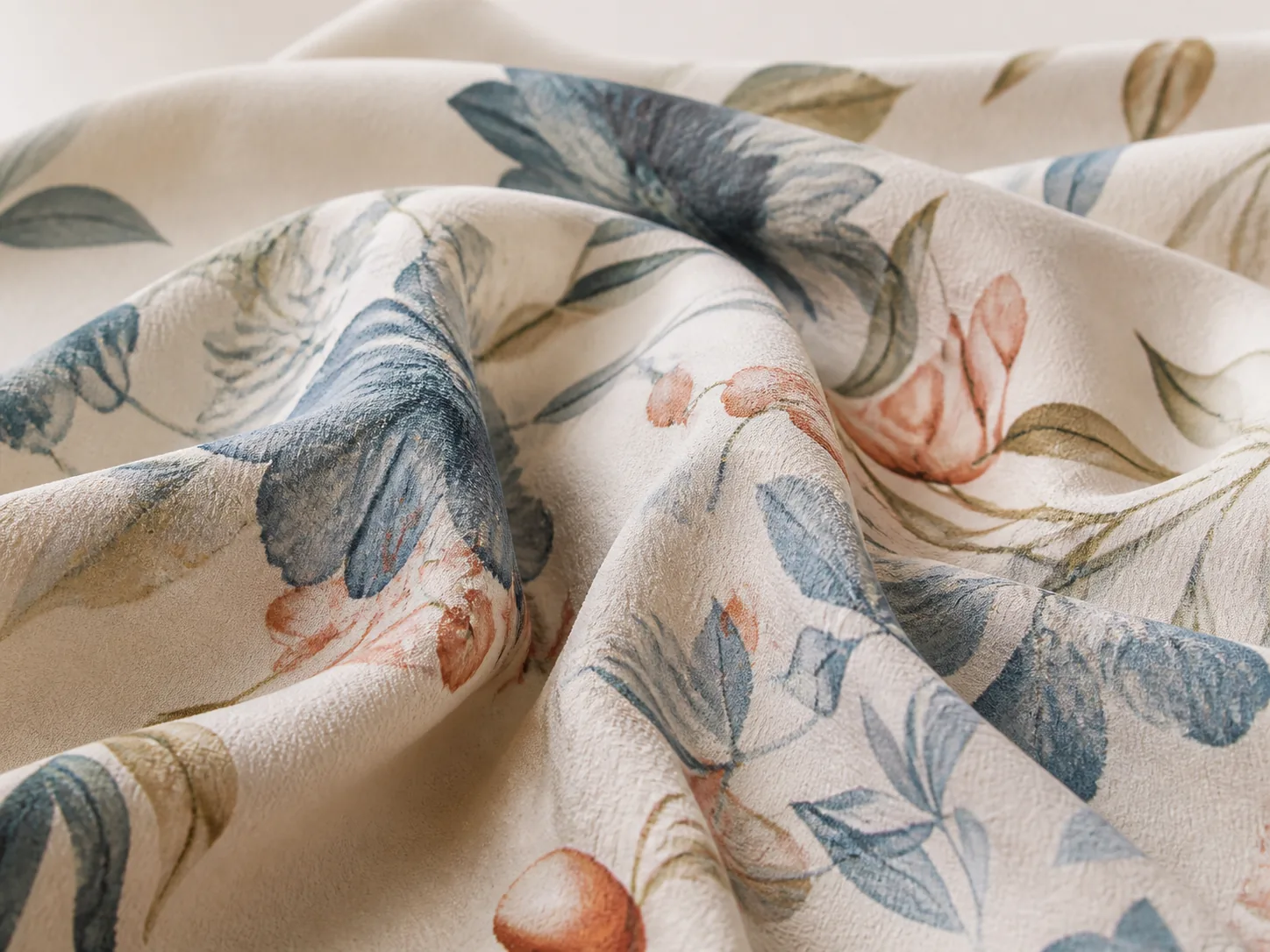
CarinaSilk’s silk crepe de Chine page presents a softly textured, less overtly shiny appearance. That can be useful when a brand wants print and colour to sit on a more understated surface. A crepe texture can change the perceived crispness of very fine artwork, while its drape and opacity still depend on the particular weight and finish. Review the fabric in a knot, not only flat on a table: a scarf is judged in motion and against clothing.
Compare the choices against your scarf brief
A fabric name is only one row in the specification. Use the same finished dimensions, artwork scale, colour references, hem and intended use when comparing two samples. Otherwise, a change in size or finishing can be mistaken for a difference in fabric.
| Buyer question | Habotai starting point | Crepe de Chine starting point | What to verify |
|---|---|---|---|
| Surface | Smoother, simpler look | Fine crepe texture | View the proposed cloth in daylight and store lighting |
| Light reflection | Gentle sheen | Typically more subdued | Compare actual finish; do not rely on screen photos |
| Drape | Can feel light and airy | Can feel fluid with a textured hand | Use equal-size samples and tie them the same way |
| Print character | Artwork meets a smooth surface | Fine texture contributes to the visual result | Approve a print on the chosen base, including fine detail |
| Opacity and reverse | Depend heavily on weight and print route | Also depend on weight and print route | Hold each sample against light and view both sides |
| Finish and price | Not defined by the fabric name alone | Not defined by the fabric name alone | Quote matched weights, hems, quantities and packing |
How the choice changes a finished scarf
Artwork and colour
Ask to see your own artwork on each shortlisted base. A botanical motif, a geometric repeat and a flat brand colour reveal different issues. Fine lines should remain legible at the intended viewing distance; broad colour fields should be assessed for the finish the buyer expects. The artwork file is not the final colour standard on its own. Record the approved physical reference and any agreed colour tolerance before production.
When a scarf will be tied or folded, check which part of the design remains visible. A beautifully balanced flat print may hide its most important motif in a narrow knot. The solution may be artwork placement rather than switching fabrics. Review both the open square and the scarf in its intended styling.
Weight, opacity and the reverse side
Do not compare a light habotai sample with a much heavier crepe de Chine sample and attribute every difference to the weave. Ask for the proposed momme or other agreed weight measure, then judge the hand and transparency of the actual cloth. A lighter scarf can be desirable for an airy accessory; it is not automatically a lower-quality choice. Equally, a more substantial sample may fit a retail collection that needs a fuller knot.
Hold the fabric over both a light and a dark garment. Examine the printed and reverse sides under the same light. If the design must read clearly from either side, tell the supplier at the brief stage so the print construction can be discussed explicitly. Neither fabric name alone guarantees a particular reverse-side result.
Hems, labels and presentation
Choose the edge finish as part of the same comparison. A hand-rolled edge and a machine hem may change the perceived weight and outline of the scarf. Check whether a narrow printed border remains visible after hemming, and whether the care label or brand label sits comfortably in the finished fold. If the scarf is sold in a box, test the folded presentation and the creasing after unpacking. Packaging should be quoted for the approved scarf, not assumed from a photograph.
A practical sampling route for brand buyers
- Write one brief. State use case, finished size, design, colour references, preferred hand, opacity requirement, hem, labels, packaging and estimated quantity by design.
- Request current swatches. Ask for the exact proposed habotai and crepe de Chine bases, with composition, weight, width and finish identified. Availability can change.
- Compare like with like. Handle the swatches in the same light, over the same garments and in the same folds. Note the difference you actually observe rather than relying on a fabric-name stereotype.
- Test the artwork. Approve a print trial or finished sample on the selected base. Check colour, fine detail, reverse appearance, border position and the chosen hem.
- Freeze the reference. Attach the approved sample and dated specification to the purchase order. If the base cloth changes, ask for a new approval and quotation.
This sequence is especially helpful when several stakeholders are involved. A designer may prioritize colour and drape; a buyer may need a repeatable specification; a merchandiser may care about how the scarf looks on a hanger or in a gift box. Put those criteria in the same sample-review form so the decision is not made from memory.
Which fabric should you choose?
Start with habotai when the brief calls for a light, smooth silk accent and the sample confirms that its opacity, print appearance and durability suit the end use. Start with crepe de Chine when a subtle crepe surface and quieter reflection are part of the intended look. Neither is automatically the “premium” answer. The selected weight, finish and approved sample matter more than a simple ranking of names.
If the scarf will be a fashion-brand accessory, test the knot, fold and movement against the garments in the collection. If it is a museum or corporate gift, compare how each cloth presents the artwork and how it looks after individual packing. If the product will be used frequently, include realistic wear and care expectations in the brief. Ask the supplier to recommend a current base and explain any trade-off it introduces.
Frequently asked questions
Is habotai the same as crepe de Chine?
No. Both may be silk, but habotai is generally smoother, while crepe de Chine has a fine textured character. Verify the specific weight and finish before approving either for a scarf.
Which silk makes printed colours look better?
There is no universal winner. Artwork, dye or print route, fabric base and finishing all affect the result. Ask for the same design to be tested on the shortlisted fabric and judge the physical output in relevant lighting.
Can I choose from website photos alone?
Photos are useful for shortlisting, not final approval. Screens do not reliably communicate hand, opacity, drape or the exact printed colour. Request swatches and, where the project warrants it, a finished sample.
Does a higher momme always mean a better scarf?
No. Weight should match the intended size, styling and product promise. A light scarf and a fuller scarf can both be well specified. Compare the actual construction, finishing and sample performance rather than using one number as a quality grade.
What details should I send for a fabric recommendation?
Send the artwork or concept, scarf dimensions, intended customer and styling, desired surface, opacity and reverse-side expectations, hem, labels, packing, quantity by design and destination. Mark any undecided points so the supplier can propose alternatives transparently.
Request two comparable scarf samples
CarinaSilk can discuss a fabric shortlist against your specific scarf brief. Send your design, intended size, quantity mix and the look you want to achieve. Ask for a habotai and crepe de Chine comparison where suitable, then review the chosen base through the agreed sampling route. Contact us to request swatches or a specification-based quotation. Availability, pricing and timing depend on the final specification.