
- Foulard en soie personnalisé
- Cravate personnalisée
- Nœud papillon personnalisé
- Custom Print Fabrics
- Printed Satin Silk Fabric
- Printed Twill Silk Fabric
- Printed Silk Crepe De Chine Fabric
- Printed Silk Georgette Fabric
- Printed Silk Habotai Fabric
- Printed Silk Jacquard Fabric
- Printed Silk Cotton Fabric
- Printed Silk Viscose Fabric
- Printed Silk Linen Fabric
- Printed Silk Tencel Fabric
- Printed Silk Modal Fabric
- Printed Silk Wool Fabric


A custom silk scarf quote is only useful when you know what it includes. Two prices can look far apart even though one covers a finished, individually packed scarf and the other covers a different fabric, print construction or delivery point. For a brand buyer, the goal is not to find a universal “price per scarf.” It is to define the product, understand the main cost drivers and compare quotations on the same basis.
This guide focuses on the commercial decisions behind a écharpe en soie personnalisée project. It does not publish a price list: the actual quotation depends on the approved specification, quantity and delivery terms.
Start with the finished product, not a target unit price
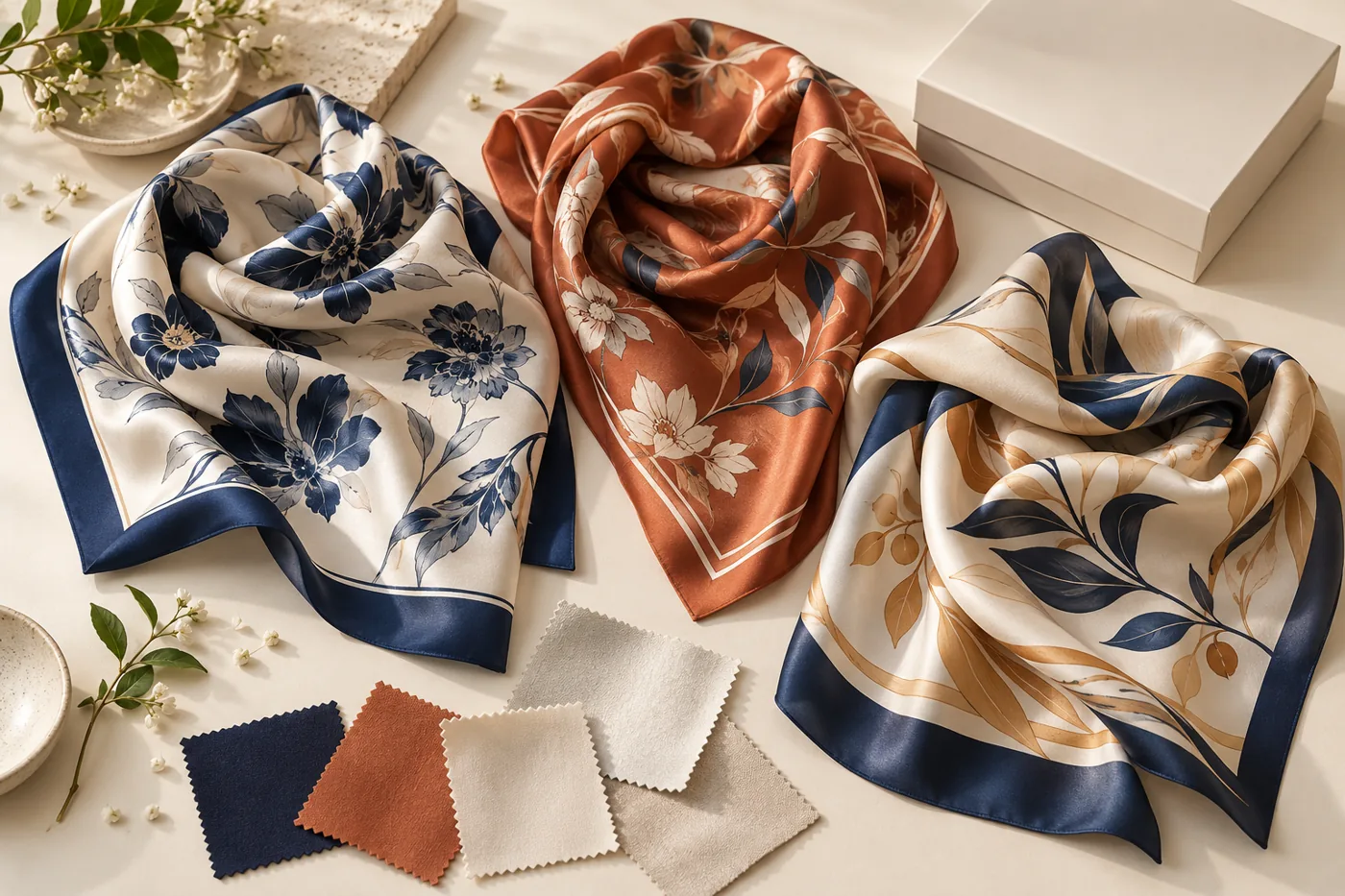
Before asking for prices, describe what the customer will receive. A finished 90 × 90 cm silk square with a hand-rolled hem, sewn label and branded box is a different product from a smaller square with a machine hem in a plain sleeve. Neither quote is meaningful without the underlying specification. Give suppliers one version-controlled brief and ask them to note every assumption they make. If your artwork, fabric or packing plan is undecided, request clearly labeled alternatives instead of allowing each supplier to guess.
Include the intended use, finished dimensions, fabric composition and construction, print appearance, edge finish, labeling, packaging, quantity by design and colorway, sampling requirement, delivery destination and target date. Our how-to-order guide explains how these choices fit into the approval process. State what is fixed and what may be recommended; that helps a supplier suggest a less expensive option without silently changing the product you meant to buy.
Seven specification choices that can move the quote
1. Fabric composition, weave and weight
“Silk scarf” is not a complete fabric specification. A silk twill, satin, crepe de Chine or chiffon can differ in surface, drape and weight. The selected cloth affects material use and the way a printed design appears. The three basic woven structures are plain, twill and satin, according to CottonWorks’ weaving overview; they should not be treated as interchangeable names for the same base. Ask for the exact fiber content, weave, weight and intended production fabric. A swatch or physical sample is more useful than judging from a screen alone.
2. Finished size and cutting layout
A larger scarf generally requires more fabric, but size is not simply a linear price multiplier. Finished dimensions, usable fabric width, hem allowance and cutting layout all matter. A custom size may change how efficiently pieces fit across the available cloth. When comparing quotations, specify finished width and length in centimeters and ask whether the supplier has allowed for the chosen hem and tolerances. If your assortment has several formats, request a separate price for each format rather than one blended figure.
3. Artwork and print construction
A simple one-sided print and a design intended to read strongly on both sides may require different preparation and production routes. Digital and screen printing also involve different setup decisions; the sensible choice depends on artwork, color count, fabric and quantity. Avoid assuming that the method named in one quote will produce the same appearance as another. Share your source artwork, scale, color references and the reverse-side expectation. Ask the supplier to describe the proposed print method and any limitations in fine lines, large flat colors or back-side appearance.
4. Edge finishing
The hem is part of the product, not an afterthought. A machine hem, hand-rolled edge or another finish changes the look, touch and work involved. Specify the finish and the side from which it should be viewed. If the design has a border close to the edge, approve the artwork allowance and finished border position before production. A quote that omits finishing, or substitutes a different finish without saying so, cannot be compared fairly with a finished-scarf quote.
5. Labels and packaging
A sewn brand label, care label, hangtag, individual sleeve and gift box are separate decisions. Packaging can also affect shipping volume. For a retail or gifting program, state whether every scarf must be folded, labeled and packed individually, and who supplies any artwork or barcodes. Request a line item for optional presentation components so you can see the value and cost of each rather than removing important details blindly.
6. Quantity and number of variations
“300 scarves” could mean one design in one colorway or a collection spread across many designs, sizes and palettes. Each version may need its own artwork record, sample review, production setup or packing identification. Give quantities per design and colorway, not only the total. Ask whether a quoted rate applies to each variant and which quantities may be combined. Do not assume that a minimum quantity or unit price can be pooled across different specifications.
7. Sampling, inspection and delivery
Find out whether a digital proof, print trial, finished sample and sample shipment are included. Clarify what happens if the buyer requests a new design version after approval. Ask how finished goods are inspected, packed and counted, and whether freight is part of the price. International shipping depends on origin, destination, package size and weight as well as service level, as FedEx explains in its shipping-cost guide. A gift box can change the parcel volume even if the scarf itself is light.
Compare quotations on a like-for-like basis
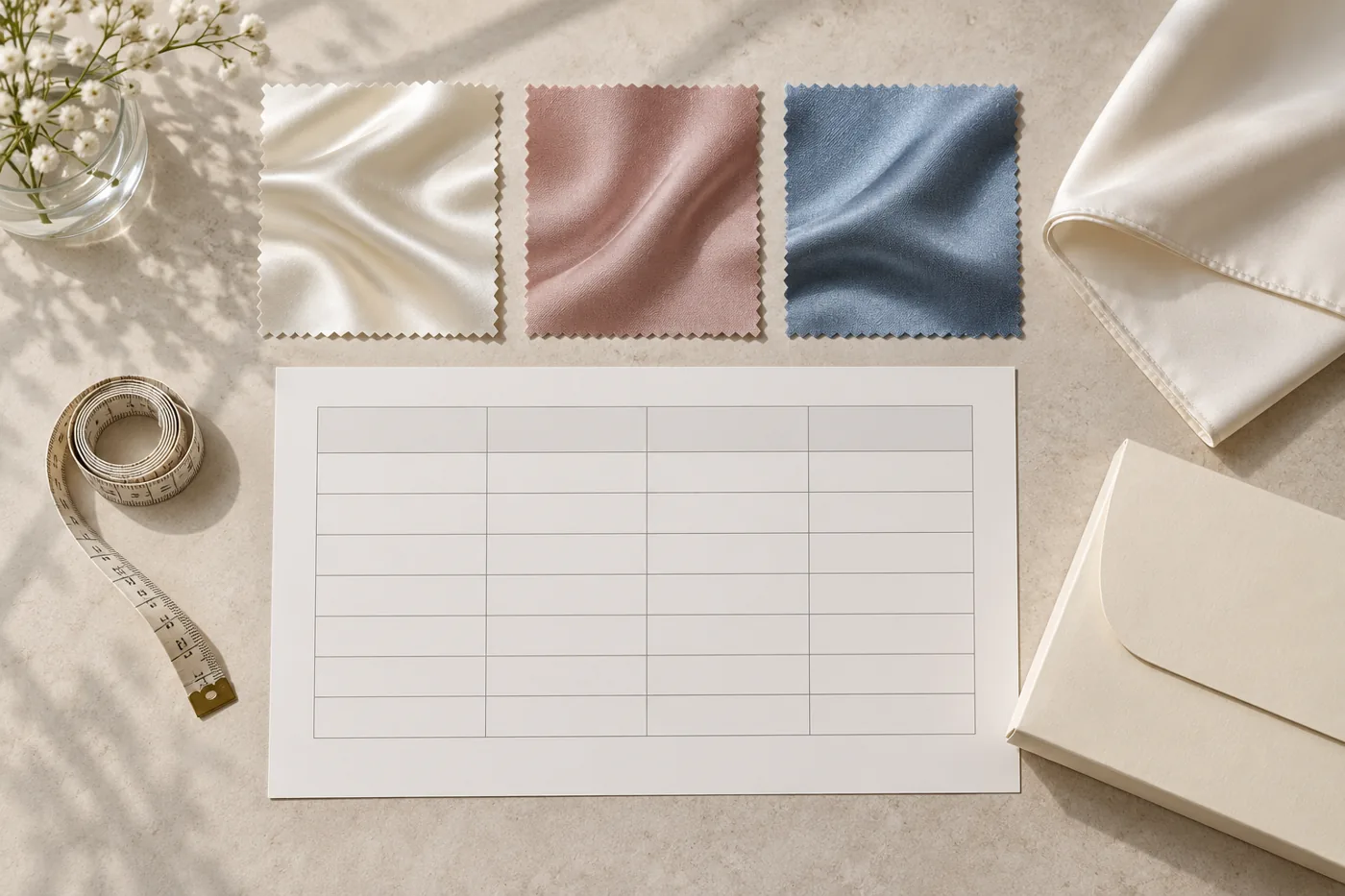
Put each offer into a simple comparison sheet. Do not compare only the number in the “unit price” cell. Ask suppliers to confirm what is included, excluded, assumed and still awaiting approval. The following matrix is a practical starting point:
| Line to compare | What to confirm | Common mismatch |
|---|---|---|
| Base scarf | Fiber content, weave, weight, finished size and tolerance | Different fabric or size |
| Method, number of sides, artwork and color expectations | Different reverse appearance | |
| Finish | Hem method, labels and any special construction | Unfinished or differently finished item |
| Variation | Quantity for each design and colorway | One total quantity priced as one design |
| Approval | Proofs, physical samples, revisions and sample shipping | Sample costs excluded |
| Packing | Individual pack, hangtag, box and carton details | Gift packaging excluded |
| Delivery | Currency, named place, trade term and freight scope | Different handover points |
For cross-border orders, write the agreed trade term and named place on every quote. The International Chamber of Commerce explains that Incoterms® 2020 allocate different costs and responsibilities between buyer and seller. They do not make two offers equivalent unless the same rule and named place are used. If a supplier writes only “shipping included,” ask where delivery ends and which charges remain for the buyer.
What can you simplify without weakening the product?
Begin with the customer promise. If the scarf must feel substantial, changing to an unapproved lighter cloth may save money but damage the product proposition. If the scarf is a corporate event gift, a simpler box might be acceptable while accurate brand color and legible artwork are non-negotiable. Record those priorities before requesting alternatives.
Useful options to test include a standard finished size instead of an unusual cut, one strong colorway instead of several tentative ones, a different but approved edge finish, or a simpler pack. Ask the supplier to quote the original and alternative specifications side by side. Then request a sample of the chosen version. Never present an alternative as equivalent until its appearance and handling have been reviewed on the intended material.
Questions to resolve before approving a purchase order
- Is the quote tied to a dated specification and artwork revision?
- Are unit prices shown separately for each size, design and colorway?
- Which proofs, samples and revisions are included, and what triggers extra work?
- Are labels, packaging, inspection and freight clearly included or excluded?
- What is the delivery term, named place and payment currency?
- What physical sample or documented reference will control production approval?
Keep the approved reference and its version code with the purchase order. If the fabric, artwork or packing changes later, ask for a revised quote and approval route. A clear paper trail protects both the buyer and the manufacturer from confusing a new product with the one originally priced.
Frequently asked questions
Is there a standard price for a custom silk scarf?
No single price is meaningful without a specification. Fabric, size, print construction, finishing, variations, packaging and delivery scope all affect a project quotation. Ask for a written price against your exact brief.
Does a larger order always lower the unit price?
Not necessarily in a simple or uniform way. Quantity can affect how work is allocated, but an order split across several designs and colorways may have different requirements from one repeated design. Request prices for your actual quantity mix.
Should I choose the lowest quotation?
Only after confirming the product and service scope are comparable. A lower quote may be useful, but check fabric, print side, hem, labels, sample route, packing, inspection and delivery terms before deciding.
Can I get a quote before my artwork is final?
You can request a preliminary estimate using the best available specifications. Label open decisions clearly, and expect the supplier to revise the quotation once artwork, fabric and finishing are confirmed.
What should I send to receive a useful quote?
Share the intended use, artwork or concept, finished size, preferred fabric, print and reverse-side expectation, hem, labels, packaging, quantity by variation, destination and target date. Tell the supplier where recommendations are welcome.
Request a specification-based quotation
The best starting point is a short, honest brief—not an invented target price. Send CarinaSilk your artwork or concept, intended scarf format, preferred silk, proposed quantity by design and colorway, packaging requirements and delivery destination. We can discuss suitable options and the sampling route before a final quotation. Request a quote or sampling discussion; pricing and timing depend on the approved specification.