
- カスタム・シルク・スカーフ
- カスタム・タイ
- カスタム蝶ネクタイ
- Custom Print Fabrics
- Printed Satin Silk Fabric
- Printed Twill Silk Fabric
- Printed Silk Crepe De Chine Fabric
- Printed Silk Georgette Fabric
- Printed Silk Habotai Fabric
- Printed Silk Jacquard Fabric
- Printed Silk Cotton Fabric
- Printed Silk Viscose Fabric
- Printed Silk Linen Fabric
- Printed Silk Tencel Fabric
- Printed Silk Modal Fabric
- Printed Silk Wool Fabric



Private label silk scarf packaging is more than a box chosen at the end of production. It connects the scarf, the brand, the sales channel and the fulfillment process. A presentation that looks elegant in a showroom may be inefficient for e-commerce, while a compact protective pack may not deliver the right experience for a premium gift program.
The practical approach is to define the complete packaging system before approving the production sample. That system includes every label attached to the scarf, the way the scarf is folded, the protective layer, the retail presentation, the barcode or SKU, and the shipping carton. This buyer checklist explains the decisions to make and the details to confirm with your supplier.
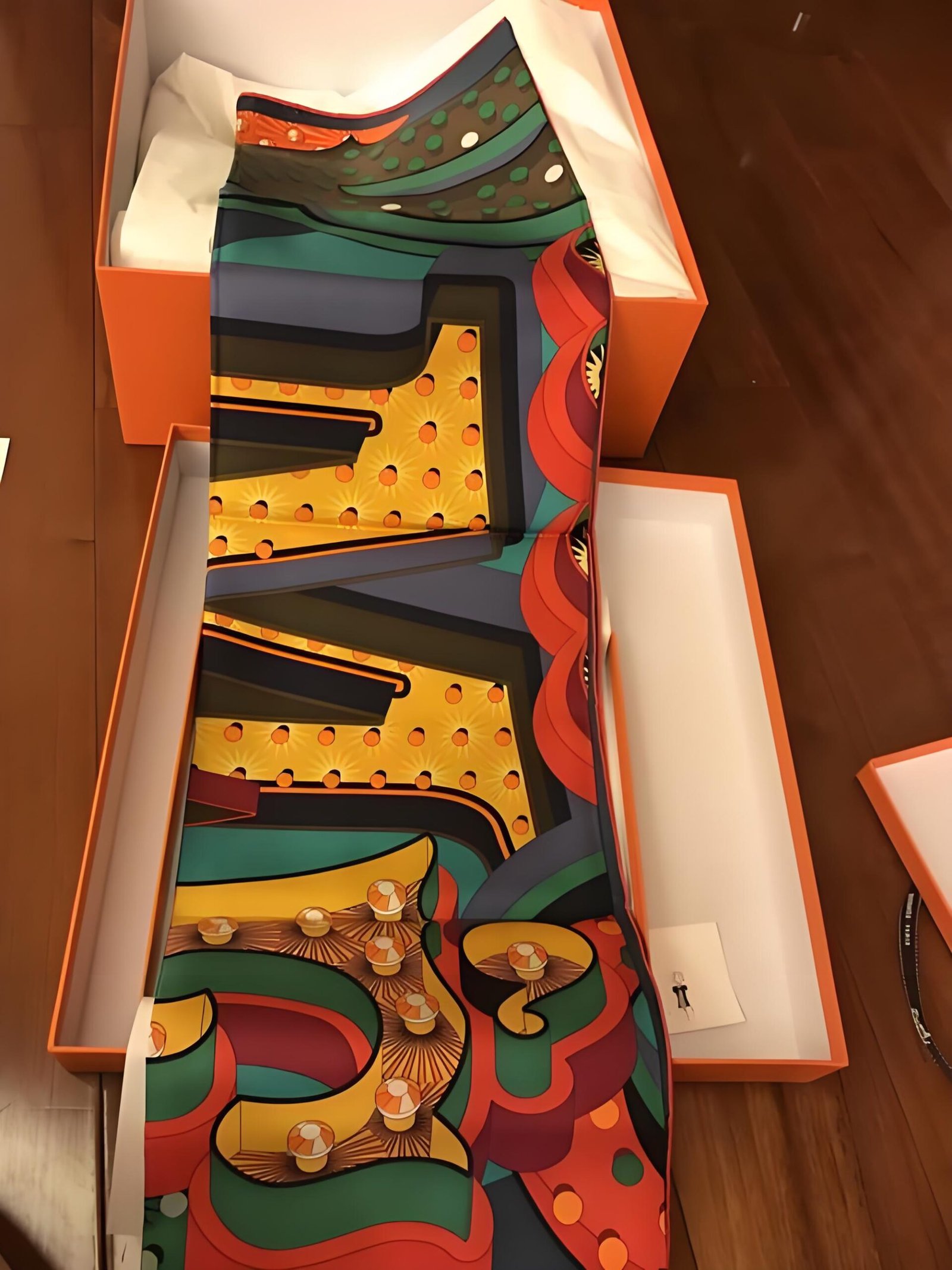
Start with the sales channel, not the box
Packaging decisions become much easier when the end use is clear. A scarf sold through a boutique needs fast identification and tidy shelf presentation. An online order needs protection, compact dimensions and a straightforward packing process. A corporate gift may need a message card, recipient-ready presentation and controlled branding. Museum shops and cultural institutions may also require product information or a story card that connects the design to a collection.
Before requesting packaging quotations, document the following:
- Where the scarf will be sold or distributed
- Whether staff or a fulfillment partner will add anything after delivery
- The preferred folding method and finished pack dimensions
- The required labels, languages, SKUs and barcodes
- Whether the pack will be displayed, shipped individually or placed inside another gift box
- Any destination-market labeling and recycling requirements that your compliance adviser has confirmed
These details form a usable brief for a custom silk scarf project. They also prevent an attractive packaging concept from creating unexpected work at the warehouse.
Plan three packaging layers
It helps to separate packaging into three layers. They solve different problems and should be approved together.
1. Product-contact layer
This is the material closest to the scarf. Its main role is to keep the folded product clean and organized during handling. Depending on the presentation concept, it may be a protective sleeve, tissue wrap, paper band or fabric pouch. The material must not transfer color, odor, adhesive or surface marks to the silk. If printed tissue, ribbons or dark-colored inserts touch the scarf, test the actual materials together rather than assuming they are compatible.
2. Retail or presentation layer
This layer carries the brand experience. It can be a paper envelope, folding carton, rigid gift box, reusable pouch or another format designed for the sales channel. The correct size depends on the scarf dimensions, fabric weight, finishing and folding method—not only the nominal scarf size. A 90 cm silk scarf and a small twilly create very different pack volumes.
3. Distribution layer
The outer carton protects multiple packed scarves during storage and transport. Carton strength, internal arrangement and gross weight depend on the final product and shipping method. Handling marks should match the actual distribution need. ISO 780 provides internationally recognized graphical symbols for handling and storage of distribution packages, but symbols should be selected deliberately rather than added as decoration.
Build a complete label system
A private label scarf may contain several different labels. Give each one a specific purpose, position and approved artwork file.
- Brand label: communicates the label name and is usually planned as part of the scarf finishing.
- Fiber and origin information: provides required product identification for the destination market.
- Care label: communicates the care instructions and any required symbols or wording.
- Hang tag: can carry the product name, story, SKU, price field or brand message.
- Packaging label: may identify a colorway, size, collection, barcode or fulfillment information without opening the pack.
For products covered by U.S. textile rules, the U.S. Federal Trade Commission’s textile labeling guidance explains requirements concerning fiber content, country of origin and the responsible company name or registered identification number. Requirements vary by product and destination. The importer or an appropriate compliance professional should confirm the exact wording, permanence, language and placement before production.
Do not assume that printed information on a gift box automatically replaces a required product label. Treat compliance artwork and decorative packaging artwork as separate approval items unless the applicable rule clearly permits another approach.
Compare common silk scarf packaging formats
| Format | Useful for | Points to confirm |
|---|---|---|
| Protective sleeve or bag | Bulk delivery, e-commerce preparation, inner protection | Material, closure, ventilation if needed, warning text, finished dimensions |
| Paper envelope or folder | Compact retail packs and lightweight presentation | Paper weight, closure, crease strength, print finish, scarf insertion method |
| Fabric pouch | Reusable presentation and travel-oriented concepts | Fabric composition, drawcord or closure, color transfer, logo method, fit |
| Folding carton | Retail shelves, efficient storage and branded gifting | Board, structure, insert, assembly, print, protective finish, barcode area |
| Rigid gift box | Premium gifts, limited editions and presentation-led programs | Box construction, insert depth, wrap material, closure, shipping protection |
No format is automatically “premium” or “sustainable.” Quality depends on execution and fitness for purpose, while environmental claims require reliable evidence about the actual materials and disposal route. Ask for the material specification and physical sample before approving marketing language.
Control SKUs, barcodes and variable information
Packaging becomes an operations tool when a collection has multiple designs, sizes or colorways. Create a simple product data sheet that connects each internal SKU to the correct scarf artwork, label artwork, packaging artwork and barcode. Use exact naming conventions and version numbers so that a corrected file cannot be confused with an earlier approval.
If retail partners require GS1 identification, the brand owner should manage the identifiers and provide the approved barcode data. The GS1 General Specifications are the primary reference for GS1 system rules. Do not resize, crop or redraw a barcode without checking the applicable specification. Scan a printed production sample—on the actual packaging material and finish—because reflective coatings, low contrast, folds and curved surfaces can affect readability.
Keep variable information away from edges, folds, seams, magnetic closures and highly textured areas. If a label will be added by a fulfillment center, confirm the available flat area and supply a placement diagram.
Approve the fold and dimensions with a physical sample
Packaging dimensions should follow an approved scarf sample. Fabric weight, rolled or flat edges, embroidery, labels and inserts all affect the folded thickness. A box based only on a digital dieline may be too tight, causing pressure marks, or too loose, allowing the scarf to shift during transit.
Ask the supplier to demonstrate the complete packing sequence: final inspection, folding, tissue or protective layer, insert placement, closure, SKU identification and carton packing. Record the agreed fold with photographs or a short approved instruction sheet. This gives the production team, the buyer and the fulfillment partner the same reference.
If the packaging artwork is still being developed, follow a disciplined file handoff. Our guide to preparing artwork for custom silk scarf printing covers useful principles such as final dimensions, readable text and controlled file versions that also apply to packaging graphics.
Use a staged packaging sample process
A practical sample workflow separates structural decisions from final appearance:
- Specification review: confirm the scarf, fold, pack format, materials, quantities, destination and fulfillment requirements.
- Blank structural sample: check size, opening, closure, insert and assembly before investing in finished print effects.
- Artwork proof: review all panels, copy, color references, barcode data, legal text and orientation.
- Printed packaging sample: assess color, registration, finishing, legibility, assembly and interaction with the scarf.
- Packed product sample: approve the real scarf folded with every label, tag, insert and protective element.
- Shipping configuration: confirm units per carton, internal arrangement, carton marks and any required handling symbols.
Some projects can combine stages, while complex gift boxes may need more development. The appropriate sequence, cost and timing depend on the specification. The important point is to approve the complete system, not isolated components from different samples.
Final private label packaging QC checklist
Use the signed sample and approved files as the inspection reference. A final check can include:
- Correct scarf design, size, edge finish and colorway matched to the SKU
- Correct brand, care and origin labels in the approved positions
- Clean fold with no trapped threads, visible soil or avoidable pressure marks
- Correct insert, hang tag, ribbon, sticker and protective layer
- Packaging structure assembled without tears, crushed corners or excess adhesive
- Print content, spelling, orientation and version matched to the approval
- Barcode and variable data matched to the product and checked for readability
- Consistent packed dimensions and appearance across the inspected sample
- Correct unit count, assortment, carton marks and shipping configuration
Define the inspection method and acceptance criteria before bulk packing begins. “Looks good” is not a reproducible standard; photographs, measurements, approved samples and data tables give both parties a clearer basis for decisions.
Frequently asked questions
When should packaging development begin?
Begin during product development, once the approximate scarf size, fabric, finishing and sales channel are known. Final dimensions should be confirmed with an approved physical scarf sample before bulk packaging production.
Can one box size work for several silk scarf sizes?
Sometimes, but the folding method, insert and packed thickness must be tested for every size. A shared box can simplify inventory, yet an undersized or oversized pack may harm presentation or create extra fulfillment work.
What files should a buyer provide for private label packaging?
Typically, the supplier needs the approved logo and packaging artwork, dieline-based layouts, fonts or outlined text, color references, label copy, SKUs, barcode data and any placement instructions. Exact requirements depend on the printing and finishing methods.
Who is responsible for textile labeling compliance?
The buyer and importer should confirm the rules for each destination market with an appropriate compliance professional. The manufacturer can apply approved labels, but should not be expected to invent legal wording or decide market obligations without a documented specification.
Should packaging be approved before the scarf sample?
You can approve the concept and blank structure early, but final fit and the complete presentation should be approved with the real scarf, labels, tags and inserts. This reduces the risk of dimension or folding problems.
Prepare a packaging brief for your scarf project
For a useful quotation or sampling discussion, send the scarf size and fabric, estimated quantity, destination market, sales channel, preferred packaging format, artwork status, labels, inserts, barcode requirements and target delivery point. If some details are undecided, identify them as open decisions instead of guessing.
Review the full custom scarf ordering process, then contact CarinaSilk with your design and packaging brief to request a project-specific quotation or sampling plan.