
- 맞춤 실크 스카프
- 맞춤 넥타이
- 맞춤 나비 넥타이
- Custom Print Fabrics
- Printed Satin Silk Fabric
- Printed Twill Silk Fabric
- Printed Silk Crepe De Chine Fabric
- Printed Silk Georgette Fabric
- Printed Silk Habotai Fabric
- Printed Silk Jacquard Fabric
- Printed Silk Cotton Fabric
- Printed Silk Viscose Fabric
- Printed Silk Linen Fabric
- Printed Silk Tencel Fabric
- Printed Silk Modal Fabric
- Printed Silk Wool Fabric



A physical sample is the point where a custom silk scarf project becomes tangible. Artwork, specifications and digital mock-ups can describe the intention, but they cannot fully show how the chosen silk will feel, how printed colors will interact with the surface, how the scarf will drape or how the finished edge will look in hand.
This custom silk scarf sample checklist helps B2B buyers review a sample systematically before authorizing bulk production. It is designed for fashion brands, museum stores, corporate gifting teams, airlines, schools and other organizations that need a clear approval record. If you are planning a new project, begin with CarinaSilk’s custom silk scarf service to define the product, fabric, print and finishing scope.
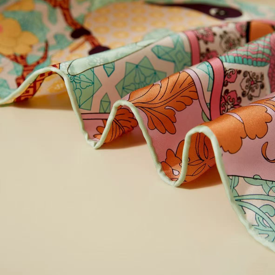
Know What Each Sample Can Approve
| Sample or proof | Useful for reviewing | What it cannot confirm alone |
|---|---|---|
| Digital mock-up | Layout, scale, logo placement, text and border proportions | True fabric color, handle, drape and physical finishing |
| Print strike-off or printed swatch | Color direction, print clarity, fine details and result on the selected fabric | Finished dimensions, hems, labels and retail presentation |
| Finished development sample | Fabric, print, size, shape, edge, label placement and overall appearance | Consistency across the entire bulk order |
| Pre-production reference, when used | The final combination of approved specifications before bulk starts | Final production inspection and packing accuracy |
Suppliers may use different names for these stages, so ask what the sample includes rather than relying on the label alone. Your approval should identify the exact physical item and specification version that will serve as the production reference.
1. Freeze the Review Specification First
Do not inspect a sample against memory or a scattered email chain. Place the latest product requirements beside the sample and confirm that all files use the same style number, colorway name and revision date. At minimum, the review record should identify:
- Scarf shape and finished dimensions
- Silk type, construction and agreed weight specification
- Artwork filename and revision
- Printing method and intended face or reverse appearance
- Border, hem type, roll direction and thread color
- Brand label, care label and placement
- Packaging version and packing arrangement
- Quantity by design or colorway
If the production file is still being refined, use the artwork preparation guide for custom silk scarf printing before approving fine lines, text, borders or bleed areas.
2. Check the Silk, Handle and Drape
Start with the material because it affects every later observation. Compare the sample with the agreed fabric reference. Review the weave or surface, weight specification, opacity, sheen, softness, fluidity and how the scarf behaves when folded or tied. Confirm that the flat appearance and tied drape both suit the intended use.
Inspect the full piece for pulls, snags, holes, unintended marks or handling damage. Agree what is acceptable for the intended product position. If the material misses the brief, resolve it before approving smaller details.
3. Review Color Under Consistent Conditions
Color on a monitor is not a reliable final approval standard. Screen calibration, ambient light, file profile, ink, fabric construction and finishing can all affect appearance. Use a named physical reference when color accuracy is commercially important, and examine the sample under a consistent light source. Review it again under the lighting likely to be used in the retail or workplace environment, because two colors can appear closer or farther apart under different illumination.
Pantone’s Fashion, Home + Interiors system is designed for textiles and soft goods, but its physical references are produced on specific materials. Silk has its own surface and light response, so a code is a communication reference rather than proof of the final printed result. Approve the color as it appears on the selected silk sample.
Review every colorway separately
A successful sample in one palette does not automatically approve another. Check large solid areas for unwanted variation, gradients for smooth transitions and neutral colors for unwanted casts. Record whether the outcome is accepted, needs a specific correction or requires a new sample.
4. Inspect Print Detail and Both Sides
View the scarf from normal wearing distance and then inspect important areas closely. Logos, lettering, fine outlines and small motifs should remain recognizable. Look for unintended banding, blurred edges, registration problems, missing details, marks or abrupt gradient transitions. Compare motif position and border alignment with the approved layout.
Turn the scarf over. The reverse appearance depends on the fabric and printing construction selected for the project, so compare it with the agreed sample expectation rather than assuming both sides should be identical. Also check whether the intended front has been clearly identified for label placement and hem direction.
Separate visual approval from test requirements
Handling a sample cannot replace a specified laboratory test. If rub-fastness or another performance property matters for the destination market or end use, write the required method and acceptance criteria into the order documents. ISO 105-X12, for example, describes dry and wet rubbing tests for determining resistance to color transfer from textiles. The relevant method and requirement must be agreed for the actual project; do not infer a test result from appearance alone.
5. Measure Finished Size and Shape
Measure the finished scarf using the agreed method and compare it with the finished-size specification, not only the original cut size. Lay the item without stretching it and record the measurement points. For squares, review both directions and the diagonals when shape accuracy matters. For long scarves, check width along more than one position.
Do not invent a tolerance after receiving the sample. The acceptable range depends on the fabric, finishing method, dimensions and buyer requirement. Agree it in writing before bulk production and make sure the same method will be used during inspection.
6. Inspect Hems, Corners and Thread
Review all sides, not only the best corner in a photograph. The edge should suit the fabric and product position without excessive waviness, puckering, loose thread or bulky corners. Confirm hem type, visible width, roll direction and thread color. Small controlled variation may be natural in hand finishing, while machine finishing is generally selected for a more regular appearance.
For a detailed comparison of edge profiles and approval points, use the hand-rolled versus machine hem guide.
7. Verify Labels and Brand Details
Check the exact label artwork, spelling, fiber statement, care information and country-of-origin wording supplied for the project. Requirements vary by destination and product, so the responsible buyer should confirm the necessary labeling rules rather than relying on a generic sample. Inspect label size, material, position, orientation, attachment and whether it affects comfort or drape.
Check hang tags, barcode labels and other brand components against their approved files. A beautiful scarf with an outdated label or incorrect SKU is not ready for bulk approval.
8. Test the Packaging as a Complete Presentation
Place the sample into the proposed retail or gift packaging. Confirm fold direction, tissue or insert, label visibility, barcode position, pouch or box fit and the order in which components are assembled. The package should protect the scarf without creating unwanted creases or compressing a dimensional hem.
If multiple designs share one box or assortment, check each SKU and colorway. Packaging approval should name the correct version; “use the same box as before” is not a reliable production instruction.
Sample Approval Checklist
- The sample ID, style, colorway and revision are recorded.
- The fabric matches the agreed material specification and intended handle.
- Color has been reviewed against the named reference under consistent lighting.
- Print scale, placement, clarity, gradients and reverse appearance are accepted.
- Finished dimensions and measurement method are recorded.
- Hem type, corners, direction and thread color match the brief.
- Brand and care labels use the correct approved files and placement.
- Packaging, folding, tags and barcode arrangement are confirmed.
- Any required performance tests are named separately with agreed criteria.
- Every observation is marked Pass, Conditional or Revise.
- Corrections identify an owner, evidence and approval deadline.
- The approved physical reference and final specification are retained for bulk comparison.
Use Clear Approval Language
Avoid messages such as “looks good” when unresolved points remain. Use one of three outcomes for each field:
- Pass: the observed feature matches the requirement and may become part of the production reference.
- Conditional: it is accepted only after a named correction or document is completed and verified.
- Revise: a corrected physical or documentary sample is required before approval.
Your final release message should identify the sample, specification revision, approved colorways and any accepted comments. Later changes to fabric, artwork, size, finishing, labels or packaging should return to review instead of being treated as invisible production adjustments.
Common Sample-Approval Mistakes
- Approving from photographs only. Photos do not confirm handle, drape, true color or construction.
- Mixing file versions. A sample cannot be a reliable reference if the matching artwork and specification are unclear.
- Checking only the center print. Borders, corners, reverse appearance and labels also affect the finished product.
- Leaving packaging until after product approval. Folding and pack fit can change presentation.
- Assuming one sample guarantees the entire order. The sample is a production reference; bulk still requires appropriate inspection.
자주 묻는 질문
Can I approve a custom silk scarf from a digital mock-up?
A mock-up is useful for layout, scale and placement, but it cannot confirm fabric feel, true printed color, drape, hems or labels. Use a physical sample when those characteristics affect the buying decision.
Should every colorway have its own sample?
Each colorway should have a documented approval path. Whether that requires a complete finished sample or a smaller print approval depends on the design differences, fabric, process and buyer risk level.
What if the sample is acceptable except for one detail?
Mark the item Conditional only when the correction, responsible party and required evidence are explicit. Request a revised physical sample when the change could affect appearance, fit, construction or another connected feature.
Does an approved sample replace bulk inspection?
No. It provides a comparison reference for production. The appropriate inspection scope depends on the order, risk, destination requirements and agreed quality plan.
How many sample rounds are needed?
There is no universal number. It depends on the clarity of the brief, fabric availability, artwork, color expectations, finishing and changes requested during development.
Request a Project-Specific Sample Review
Send CarinaSilk your scarf dimensions, artwork, fabric direction, quantity by design, finishing requirements and packaging plan. We can review the specification and discuss a project-specific quotation and sampling path. Contact CarinaSilk to start your custom silk scarf sample.
Technical References
- Pantone: Color Systems for Textiles — official overview of the Fashion, Home + Interiors system and material-based textile references.
- ISO 105-X12:2016 — official standard page for textile color fastness to rubbing, including dry and wet test approaches.